Archives
- 2026-10
- 2026-09
- 2026-08
- 2026-07
- 2026-06
- 2026-05
- 2026-04
- 2026-03
- 2026-02
- 2026-01
- 2025-12
- 2025-11
- 2025-10
- 2025-09
- 2025-03
- 2025-02
- 2025-01
- 2024-12
- 2024-11
- 2024-10
- 2024-09
- 2024-08
- 2024-07
- 2024-06
- 2024-05
- 2024-04
- 2024-03
- 2024-02
- 2024-01
- 2023-12
- 2023-11
- 2023-10
- 2023-09
- 2023-08
- 2023-07
- 2023-06
- 2023-05
- 2023-04
- 2023-03
- 2023-02
- 2023-01
- 2022-12
- 2022-11
- 2022-10
- 2022-09
- 2022-08
- 2022-07
- 2022-06
- 2022-05
- 2022-04
- 2022-03
- 2022-02
- 2022-01
-
Immunohistochemistry in tissue samples showed the expression
2024-07-20
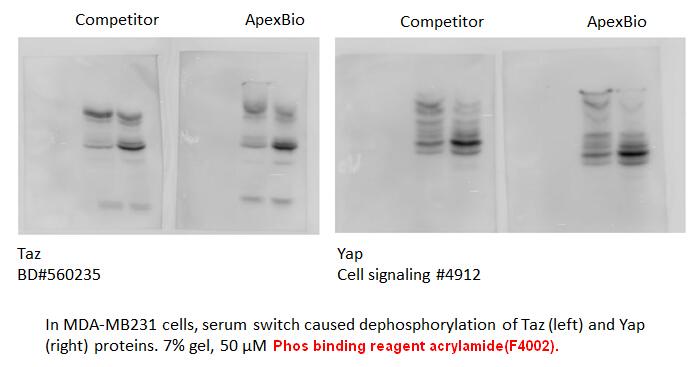
Immunohistochemistry in tissue samples showed the expression of several nuclear receptor co-activators, including NCOA1, NCOA2, NCOA3, CREBBP, and EP300, in 85–100% of 5mCTP cost tumors even some of which lacked AR expression (Boorjian et al., 2009). Knockdown of each co-activator also resulted in
-
However a high triglyceride level was associated
2024-07-19

However, a high triglyceride level was associated with dementia in a study with subjects aged ≥65 years (Raffaitin et al., 2009). In another study, the serum triglyceride levels of three different transgenic mouse strains mimicking AD were also evaluated within the progression of the pathology. In o
-
br AHR mediates TCDD toxicity
2024-07-19
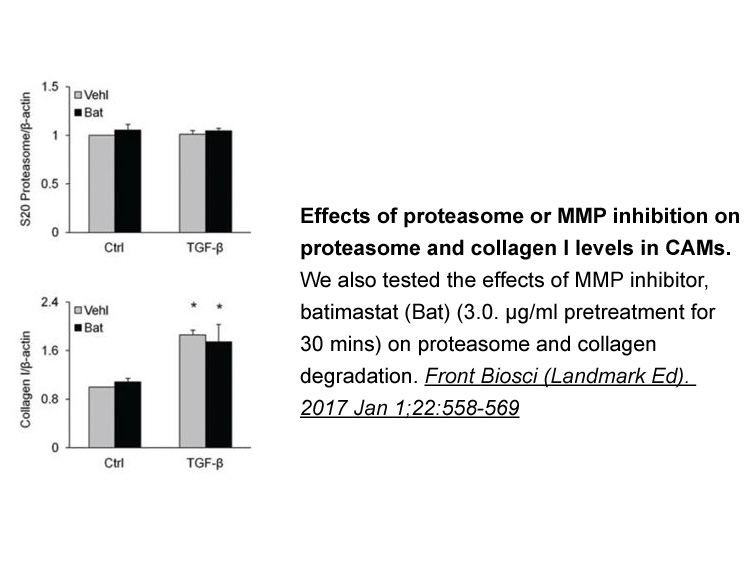
AHR mediates TCDD toxicity and wasting syndrome TCDD causes numerous toxicities in laboratory animals, including teratogenesis, hepatic steatosis, thymic atrophy, immune dysfunction and a lethal wasting syndrome [17]. The dose-dependent sensitivity to TCDD-induced toxicities varies widely among l
-
In glaucoma the primary retinal defect appears in
2024-07-19
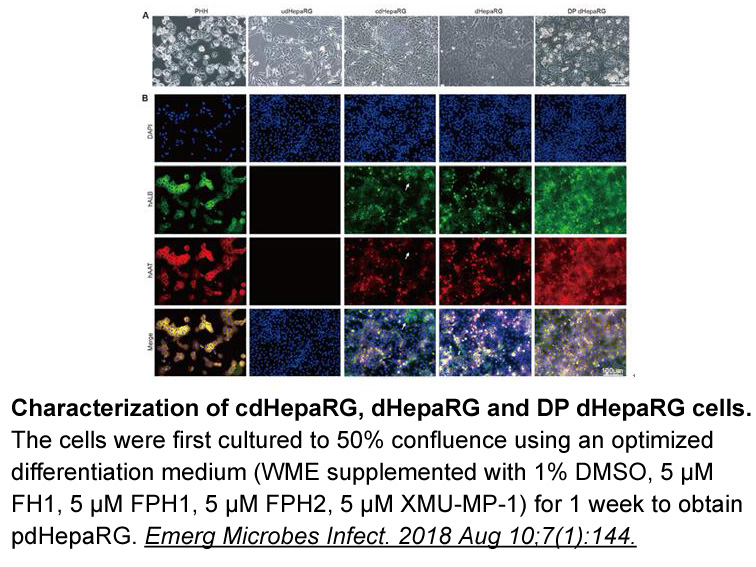
In glaucoma, the primary retinal defect appears in the GCL, whereas the other retinal layers appear normal (Kendell et al., 1995). In the current work, chronic elevation of IOP induced RGC apoptosis, especially in the GCL, and α2 adrenergic treatment reduced RGC apoptosis. Various studies have repor
-
We have previously shown that the human gonadotropins hLH an
2024-07-19
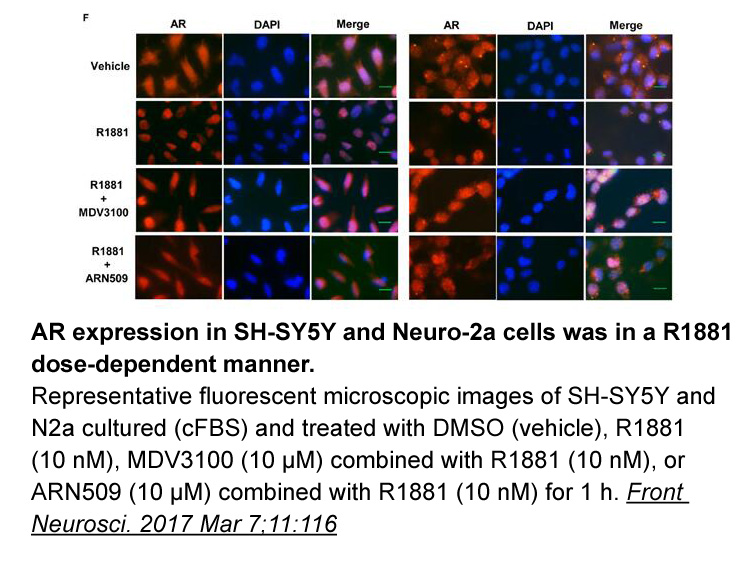
We have previously shown that the human gonadotropins hLH and hCG trigger a partly irreversible stimulation of intracellular cyclic AMP accumulation in mouse Leydig Tumor CP 154526 (MLTC) in contrast to all other tested mammalian LHs and CG (Klett et al., 2016). In order to get a better insight in
-
The scattering operators associated to are defined as
2024-07-19
The scattering operators associated to are defined as follows: for any and , , , there exists a unique solution to the following equation such that Then the scattering operator is defined by Here is an elliptic pseudodifferential operator of order , which is conformally covariant on the boundary.
-
Although plant Aurora kinases can be clearly grouped into
2024-07-19
Although plant Aurora kinases can be clearly grouped into functional clades, the roles of the respective clades does not seem to be evolutionarily conserved. AtAurora 1 labels kinetochore microtubules [19], similarly to mammalian Aurora A, while its targeting to the cell plate resembles features of
-
The skin permeability barrier is important for
2024-07-19
The skin permeability barrier is important for the prevention of loss of water and electrolytes from inside the body and for protection against the invasion of external pathogens, allergens, and harmful compounds. Multi-layered lipids, called lipid lamellae, are present in the outermost cell layer o
-
A different mechanism has been suggested for the
2024-07-19

A different mechanism has been suggested for the role of TRX1 in ASK1 regulation based on disulfide bond-mediated ASK1 multimerization and its reduction through the thiol-reductase activity of TRX1 (Nadeau et al., 2007, Nadeau et al., 2009). In this model, oxidative stress induces intermolecular dis
-
We made a number of choices
2024-07-18
We made a number of choices in the original design of our experiments. First, we used only portions of the 5′ and 3′ regulatory elements from S. cerevisiae. The sequences of these regions were known [32] and our goal was to express the Pf-DHFR at low levels. In fact, our choice of only 600 bp of the
-
br Acknowledgements br Introduction Microbial enzymes have g
2024-07-18
Acknowledgements Introduction Microbial enzymes have gained interest for their widespread uses in industries and medicine owing to their stability, catalytic activity, and ease of production and optimization than plant and animal enzymes (Singh et al., 2016). Microbial aminopeptidases (amino-a
-
A number of interesting anti inflammatory molecules have
2024-07-18
A number of interesting anti-inflammatory molecules have also been identified that are derived from AA or ω−3 fatty acids, including the lipoxins (for “lipoxygenase interaction products”), resolvins, and protectins [18], [19] (Fig. 1). The lipoxins are synthesized from AA by 5-, 12-, and 15-LOX, as
-
cpmt Composite soil samples were transported to the laborato
2024-07-17
Composite soil samples were transported to the laboratory and then dried, crushed and passed through a 2mm sieve was. Sample digestion and release of elements method Sposito was performed [15]. Accordingly, taking into account soil moisture to 2g soil samples 12.5ml of nitric acid was added 4M. Samp
-
DRiPs also contribute to formation of
2024-07-17
DRiPs also contribute to formation of protein 8-CPT-2Me-cAMP, sodium salt that result from dysregulation of proteostasis, during which the proteolytic machinery is unable to process and degrade defective proteins (Tyedmers et al., 2010). Aggregation of poly-ubiquitinated proteins has been observed
-
Aurora B is also very important in proper
2024-07-17
Aurora-B is also very important in proper cytokinesis. In the absence of Aurora-B mediated phosphorylation of Ser72 in vimentin, the two daughter cells remain attached to each other through bridges of cytoplasm; cytokinesis fails [31]. Other Aurora-B dependent proteins that are important for cytokin
8438 records 146/563 page Previous Next First page 上5页 146147148149150 下5页 Last page