Archives
- 2026-08
- 2026-07
- 2026-06
- 2026-05
- 2026-04
- 2026-03
- 2026-02
- 2026-01
- 2025-12
- 2025-11
- 2025-10
- 2025-09
- 2025-03
- 2025-02
- 2025-01
- 2024-12
- 2024-11
- 2024-10
- 2024-09
- 2024-08
- 2024-07
- 2024-06
- 2024-05
- 2024-04
- 2024-03
- 2024-02
- 2024-01
- 2023-12
- 2023-11
- 2023-10
- 2023-09
- 2023-08
- 2023-07
- 2023-06
- 2023-05
- 2023-04
- 2023-03
- 2023-02
- 2023-01
- 2022-12
- 2022-11
- 2022-10
- 2022-09
- 2022-08
- 2022-07
- 2022-06
- 2022-05
- 2022-04
- 2022-03
- 2022-02
- 2022-01
- 2021-12
- 2021-11
- 2021-10
- 2021-09
- 2021-08
- 2021-07
- 2021-06
- 2021-05
- 2021-04
- 2021-03
- 2021-02
- 2021-01
- 2020-12
- 2020-11
- 2020-10
- 2020-09
- 2020-08
- 2020-07
- 2020-06
- 2020-05
- 2020-04
- 2020-03
- 2020-02
- 2020-01
- 2019-12
- 2019-11
- 2019-10
- 2019-09
- 2019-08
- 2019-07
- 2019-06
- 2019-05
- 2019-04
- 2018-11
- 2018-10
- 2018-07
-
Our observations with RBC in
2021-11-30
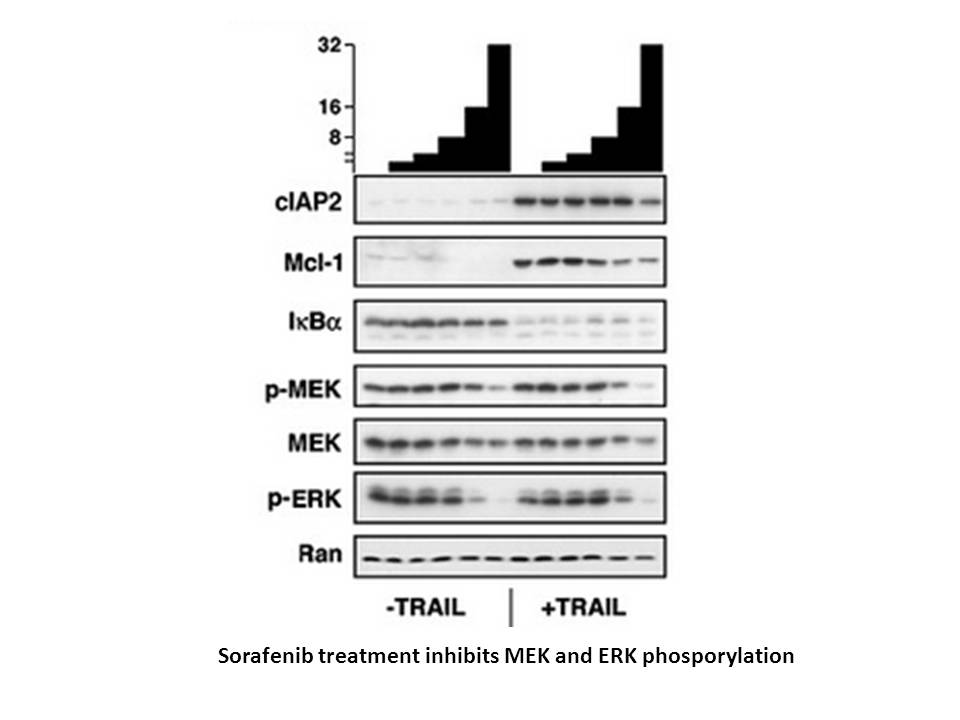
Our observations with RBC8 in human platelets suggested a more wide-ranging role for Rals in platelet function compared to our observations in Ral deficient mouse platelets. Using lumi-aggregometry, 10 μM RBC8 significantly reduced platelet aggregation and ATP secretion responses in both WT and DKO
-
br Conclusion The following is the supplementary data
2021-11-30
Conclusion The following is the supplementary data related to this article. Conflict of interest Funding Acknowledgements Peroxiredoxin VI (Prdx6) is a dual-functioning antioxidant enzyme that acts to protect biological membranes against damage caused by lipid peroxidation , . The en
-
The lactic acid receptor HCA is primarily expressed in
2021-11-30
The lactic (+)-Bicuculline receptor HCA1 is primarily expressed in white and brown adipocytes 11, 12, 17, 18 (Table 1). Only relatively low expression levels of HCA1 have been described in several other tissues 16, 19, and it is not clear whether this is due to the presence of adipocytes in these t
-
182 8 mg br Conclusions In summary we have designed an ultra
2021-11-29
Conclusions In summary, we have designed an ultrasensitive electrochemical assay for hOGG1 based on a ratiometric strategy and HCR assisted amplification. The hOGG1 can specifically identify 8-oxo G site on the DNA probes modified on the electrode surface. The subsequent cleavage reaction trigger
-
pHi regulation in astrocytes has been examined
2021-11-29
pHi regulation in astrocytes has been examined primarily in cell culture rather than in situ. Two HCO3−-dependent transporters, NBC and Na+-driven Cl-HCO3 exchange (NDCBE), have been described [10,16], in addition to Cl-HCO3 anion exchange (AE) [96]. Culture studies indicate that NHE is the principa
-
Next we focused on B part
2021-11-29
Next, we focused on B-part, the phthalazine ring. While both nitrogen atoms of the phthalazine ring were found to be important (data not shown), replacing the benzene ring of the phthalazine part was attempted, and shows the results of the substituted pyridazine rings with bearing 2-methoxy benzene
-
Introduction The Hedgehog Hh signaling pathway
2021-11-29
Introduction The Hedgehog (Hh) signaling pathway regulates embryonic organogenesis, tissue patterning, and cell differentiation (Armas-Lopez et al., 2017, Ingham and McMahon, 2013). Aberrant activation of Hh signaling pathway contributes to tumor formation and development of various cancers includi
-
The usefulness of GIP R antagonism for the treatment
2021-11-29
The usefulness of GIP-R antagonism for the treatment of obesity-diabetes has been revealed in numerous studies employing knockout or chemical blockade of GIP-R signalling.*88, 89, *90, 91, 92, 93, 94, 95, 96, *97 For example, sub-chronic daily administration of (Pro3)GIP to ob/ob mice results in sig
-
br Materials and methods br Results br
2021-11-29
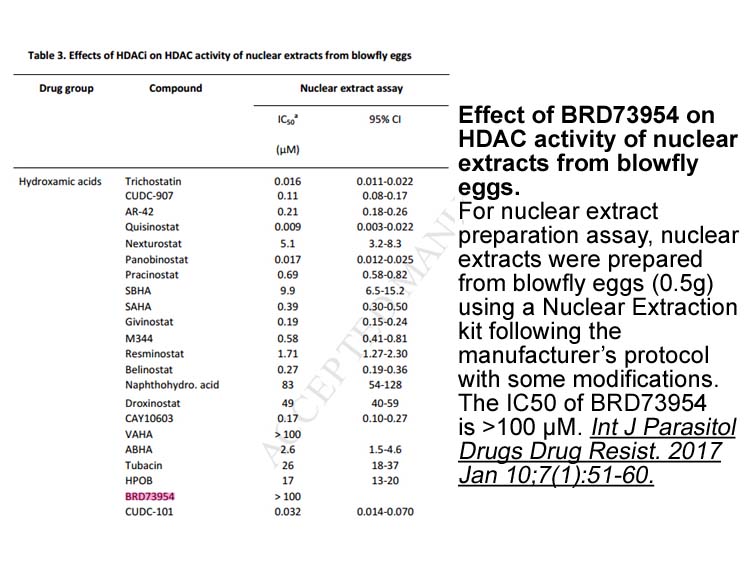
Materials and methods Results Discussion Present study demonstrated the ability of a GIP agonist, D-Ala2GIP, to protect against the QA-induced neurobehavioral phenotype of HD in rats, for the first time. D-Ala2GIP treatment significantly improved the behavioral deficits, biochemical and neu
-
No specific inhibitor of KCC has progressed to clinical
2021-11-29
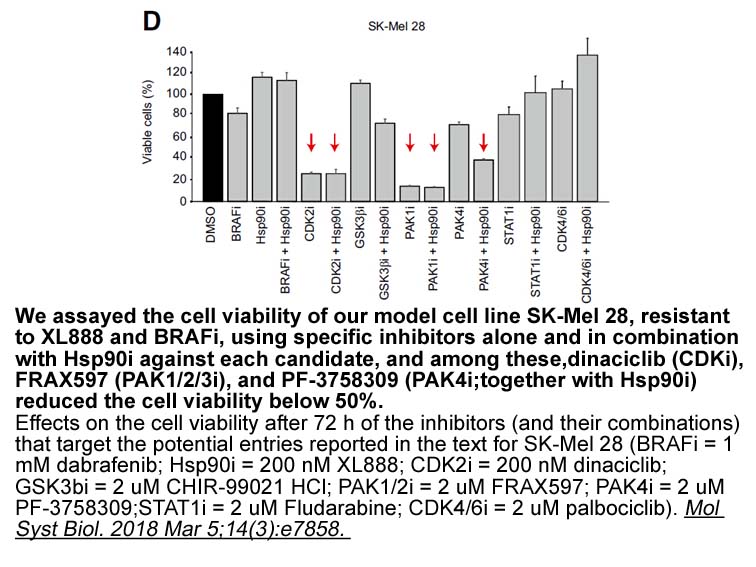
No specific inhibitor of KCC has progressed to clinical trials, however, although compounds like H74 were shown to specifically target KCC over the related Na+-K+-2Cl− cotransporter (NKCC) (Ellory et al., 1990). This molecule, or its related analogues, represent compounds of promise. Simple Mg suppl
-
Based upon the present findings it is tempting to
2021-11-29

Based upon the present findings, it is tempting to imagine that selective, and especially stable blood–brain barrier (BBB) penetrating GalR1 antagonists might be useful as drugs for acute suppression of appetite. While this may be possible, previous studies using nonspecific galanin antagonists yiel
-
LY294002 As for all DOACs measurement
2021-11-29
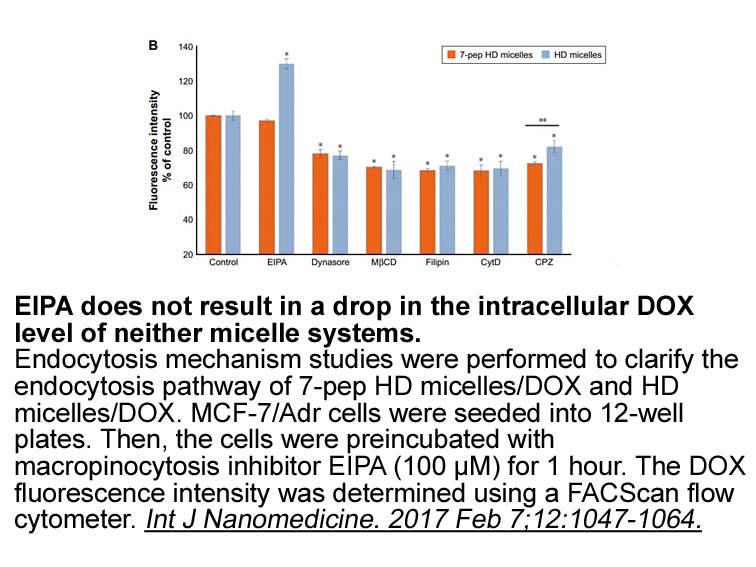
As for all DOACs, measurement of DiXaIs activity requires the use of dedicated specific calibrators and controls. Each drug needs its own calibration and control material in a like to like manner. In no case can a drug concentration be extrapolated with the use of a calibrator established for anothe
-
Interest in the non coding
2021-11-29

Interest in the non-coding genome has recently surfaced with accelerated emphasis in the past few years (Li et al., 2016). Transcription factors (TFs) bind to enhancers and mediate RNA initiation from distal transcriptional start sites (TSS) of genes. Epigenome sequencing of human and mouse during d
-
All of the designed compounds was synth http www
2021-11-29

All of the designed compounds – was synthesized from -cyclopropane aldehyde , which was prepared following a procedure we reported previously. Treatment of with 4-chlorobenzene-1,2-diamine in pyridine constructed benzimidazole structure of , which was subjected to deprotection and subsequent oxidat
-
shows the hormonal and follicular growth profile of
2021-11-29
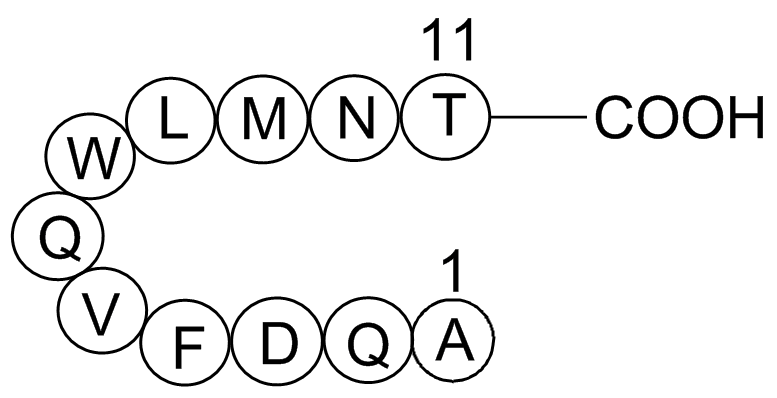
shows the hormonal and follicular growth profile of the woman who ovulated in both cycles. In cycle 1, an LH surge occurred on day 17, when serum oestradiol concentration was 210.5 pg/ml and follicle diameter 17 mm. In cycle 2, ganirelix administration was continued until day 19 instead of until the
16799 records 579/1120 page Previous Next First page 上5页 576577578579580 下5页 Last page